

In premium developments across the UAE, imported door systems are often selected to achieve a specific aesthetic or align with international design standards. On paper, these systems promise quality, precision, and durability.
Yet on-site experience tells a different story.
Many developers and contractors face recurring issues—warping, misalignment, surface failure, and hardware problems—despite using well-known imported products.
The problem is rarely the brand itself. It is the gap between where the system was designed and where it is being used.
This article explains why that gap exists—and how to avoid costly mistakes by specifying door systems correctly for UAE conditions.
Why Do Imported Door Systems Underperform in UAE Projects?
Direct Answer
Because they are typically engineered for different environmental conditions and construction standards than those found in the UAE.
Detailed Explanation
Door systems are highly sensitive to their operating environment.
When products developed for Europe or similar climates are installed in the UAE, they encounter:
Higher temperature exposure
Greater humidity variation
Faster construction timelines
Different installation sequencing
These factors introduce stresses that were not accounted for in the original engineering.
As a result, even high-quality imported systems may struggle to maintain alignment, finish quality, and long-term performance.
What Makes UAE Construction Conditions Unique?
Direct Answer
Extreme climate conditions combined with fast-paced construction environments create additional stress on door systems.
Detailed Explanation
Projects in the UAE are typically delivered under tight timelines, with multiple trades working simultaneously.
At the same time, environmental conditions include:
Intense external heat
Strong indoor cooling systems
Periods of high humidity during finishing works
During construction, doors may be exposed to:
Wet processes such as plastering and tiling
Dust and debris
Temperature fluctuations between indoor and outdoor environments
These conditions can affect both the structure and finish of a door system.
Imported products not designed for these conditions may deteriorate faster or require constant adjustment.
How Do Materials Behave Differently in the UAE?
Direct Answer
Materials react more aggressively to heat and humidity, affecting stability and durability.
Detailed Explanation
Material behavior is one of the most critical factors in door performance.
In UAE conditions:
Wood-based cores may absorb moisture and expand
Low-quality adhesives may weaken under heat
Surface finishes may crack or peel
Structural elements may shift slightly over time
Even small dimensional changes can impact door alignment—especially in modern flush systems.
Door systems engineered for the region typically use:
Moisture-resistant cores
Stable bonding technologies
Aluminum or reinforced structural frames
These solutions reduce the impact of environmental stress and improve long-term reliability.
Why Do Hidden Door Systems Face Higher Risk?
Direct Answer
Because they require perfect alignment and are less tolerant of material movement or installation errors.
Detailed Explanation
Hidden doors are designed to sit flush with the wall, creating a seamless architectural surface.
This design leaves no room for inconsistency.
Unlike traditional doors:
There are no trims to hide gaps
Frame alignment is fully exposed
Surface deviations are immediately visible
If materials expand, contract, or shift, the effect becomes noticeable.
This is why imported hidden door systems often fail faster than standard doors when not adapted to local conditions.
What Role Does Installation Timing Play?
Direct Answer
Improper installation timing exposes doors to damaging conditions during construction.
Detailed Explanation
One of the most common issues in UAE projects is installing doors too early.
When doors are installed before wet works are completed, they are exposed to:
High humidity from plaster and paint
Water contact during cleaning or tiling
Temperature fluctuations
These factors can affect both structure and finish.
Correct installation sequencing is essential.
Door systems should be installed when:
Wet works are complete
Humidity levels are controlled
Finishing layers are stable
Ignoring this sequence often leads to premature damage—even in high-quality systems.
What Are the Most Common On-Site Failures?
Direct Answer
Warping, misalignment, finish damage, and hardware issues.
Detailed Explanation
Developers frequently encounter the following problems:
Door Leaf Warping
Caused by moisture imbalance or unstable core materials.
Frame Movement
Due to poor integration with wall systems.
Finish Deterioration
Paint, veneer, or laminate separating under heat or humidity.
Hinge Misalignment
Leading to uneven gaps and operational difficulty.
Visible Gaps in Flush Doors
A direct result of poor tolerance control or material instability.
These issues affect both performance and the perceived quality of the entire project.
Why Specification Strategy Matters More Than Product Origin
Direct Answer
Because performance depends on system compatibility, not where the product is manufactured.
Detailed Explanation
There is a common assumption that imported products automatically offer better quality.
In reality, success depends on how well the system matches project conditions.
Key considerations include:
Climate compatibility
Material stability
Tolerance design
Installation requirements
A well-engineered system adapted for UAE conditions will outperform a generic imported solution—even if both appear similar in design.
Developers should focus on performance criteria, not just origin or brand.
How Importa Approaches Door System Performance
Direct Answer
By engineering door systems specifically for UAE conditions, focusing on stability, precision, and integration.
Detailed Explanation
Importa’s approach is based on real construction experience in the region.
Key principles include:
Climate-Adapted Materials
Systems are designed to perform under high temperature and humidity conditions.
Aluminum Structural Frames
Provide dimensional stability and resistance to environmental changes.
Precision Tolerance Design
Ensures consistent alignment in flush door installations.
Compatibility with Local Construction Methods
Systems integrate seamlessly with UAE building practices and timelines.
This approach reduces common failure risks and ensures long-term performance in luxury projects.
Practical Recommendations for Developers and Contractors
To avoid issues with imported or non-adapted door systems, consider the following:
Evaluate systems based on performance, not appearance
Focus on technical specifications and material behavior.
Plan door integration early
Include door systems in architectural and construction coordination.
Control installation conditions
Avoid exposure to moisture and extreme conditions during construction.
Work with experienced suppliers
Choose partners who understand UAE project realities.
Ensure proper installation training
Even the best system requires correct execution on site.
These steps significantly reduce risk and improve project outcomes.
Common Mistakes to Avoid
Selecting Doors Late in the Project
Late decisions limit integration and increase installation challenges.
Ignoring Environmental Impact
Assuming all systems perform equally across climates leads to failure.
Overlooking Technical Details
Surface appearance should not be the primary selection criterion.
Poor Coordination Between Teams
Lack of communication between design, supply, and installation teams causes alignment issues.
Avoiding these mistakes ensures smoother project delivery and better long-term performance.
Final Thoughts
Imported door systems are not inherently flawed.
However, when they are used without considering the realities of UAE construction and climate, problems become inevitable.
For developers and contractors, the key is not to avoid imported solutions—but to ensure that any system used is properly engineered, adapted, and installed for local conditions.
In modern luxury interiors, where precision and seamless integration define quality, door systems must perform as well as they look.
The difference between success and failure is not visible in a catalog.
It is built into the system—long before installation begins.
FAQ
What are the main types of openings in Importa doors?
There are traditional hinged doors, hidden concealed doors, interior sliding doors, exterior sliding doors, pivot doors, folding doors, flush-wall doors. rotating internal and external Importa doors.
What type of interior doors do you produce in the UAE?
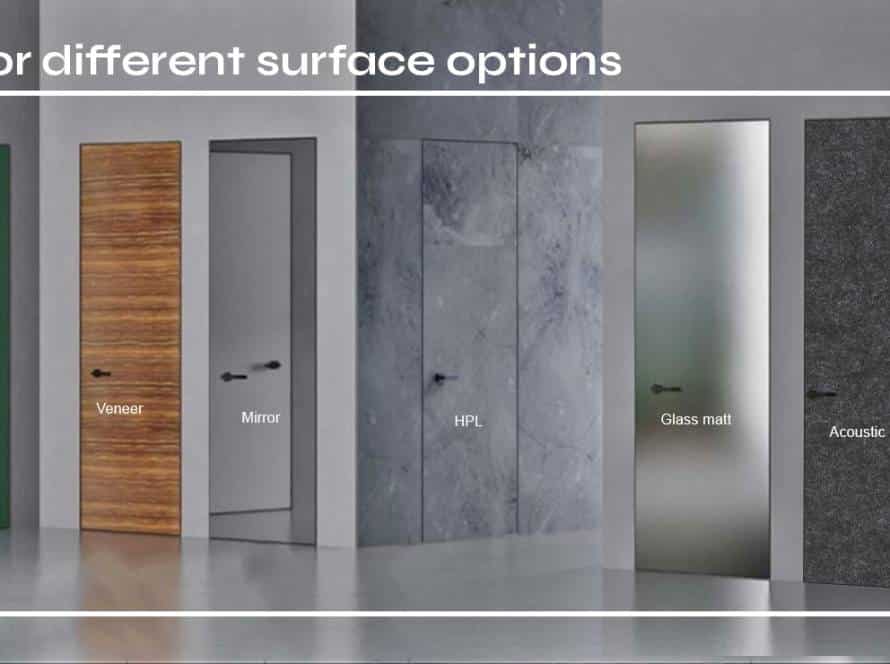
Importa produce in the UAE interior internal and external doors with different materials of surfaces. We produce in UAEprimed doors, painted doors in color of walls, doors with hpl panels in texture of stones, doors with veneer and texture of best european wood, doors with solid wood panels, doors with coloured glass, doors with mirrors as you wish. For more info call or WhatsApp us.
What is the price of Dubai doors Importa ?
The price of Dubai doors Imports depends on the sizes of doors, type of opening of doors and material of door surfaces and starts from 3600 AED. Contact us to get a quotation.
What doors company is in Dubai? What doors manufacturer is in UAE?
Importa doors company is in Dubai. Importa company whose specialization is doors production in the United Arab Emirates.