


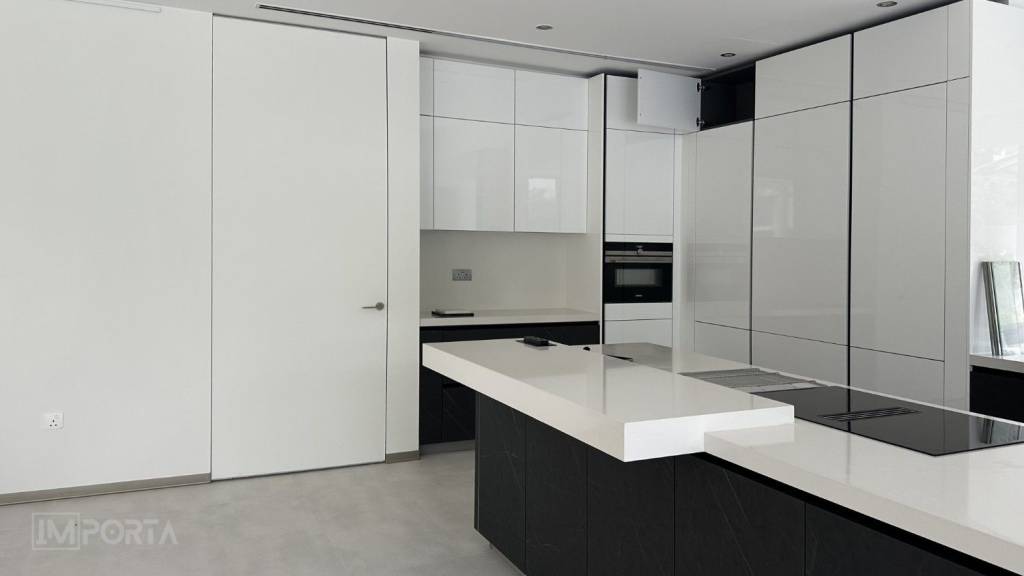
In modern UAE homes, architecture is no longer defined only by layouts or finishes—it is defined by proportion. One design element that quietly but powerfully shapes this proportion is door height. Tall doors have moved from being a luxury statement to an architectural standard in contemporary villas, apartments, and premium developments.
This shift is not about aesthetics alone. Taller doors influence how spaces feel, how walls are perceived, and how interiors flow from one zone to another. In high-ceiling environments common across the UAE, standard door heights often feel disconnected from the architecture around them.
What Are Tall Doors in Architectural Design?
This article explores how tall doors transform interior architecture, why they matter more than most people realize, and what designers, contractors, and homeowners should consider when planning them in modern UAE homes.
Direct answer
Tall doors are interior doors that extend significantly higher than standard heights, often reaching close to the ceiling.
Detailed explanation
While traditional interior doors were designed around fixed standards, modern architecture prioritizes proportion over convention. Tall doors typically range from 2400 mm to full ceiling height, depending on the space.
In contemporary UAE projects, tall doors are not chosen for novelty. They are used to:
Align openings with ceiling heights
Create vertical rhythm in interiors
Support minimalist and luxury design concepts
They function as architectural elements, not just access points.
Why Does Door Height Change the Way a Space Feels?
Direct answer
Because height influences perception more than width or decoration.
Detailed explanation
Human eyes naturally follow vertical lines. When doors are taller:
Walls appear higher
Spaces feel more open
Transitions between rooms feel smoother
Even in rooms with moderate ceiling heights, increasing door height can dramatically improve spatial balance. In villas and penthouses—common across the UAE—tall doors help match the scale of the architecture rather than fighting it.
Why Are Tall Doors Central to Modern Architecture?
They Reinforce Architectural Proportion
Modern architecture is built on alignment and balance. A low door in a high-ceiling space looks disconnected, almost accidental.
Tall doors solve this by:
Aligning with ceiling planes
Supporting clean vertical geometry
Enhancing symmetry in wall compositions
This is why architects increasingly design door heights alongside ceiling and wall layouts—not as an afterthought.
They Strengthen Minimalist Design
Minimalist architecture relies on fewer visual interruptions. Short doors create horizontal breaks that fragment walls.
Tall doors reduce these interruptions by:
Extending vertical surfaces
Allowing flush wall designs
Minimizing visible junctions
When combined with concealed frames, tall doors virtually disappear into the architecture—supporting the minimalist principle of “less, but better.”
They Elevate the Perceived Quality of Interiors
In the UAE market, interior quality is closely tied to scale. Larger elements signal custom design and thoughtful detailing.
Tall doors subconsciously communicate:
Custom craftsmanship
Architectural intent
Premium construction standards
This is why developers and homeowners increasingly request tall doors in luxury projects.
Are Tall Doors Just a Design Choice?
Direct answer
No. They are an engineering decision as much as a design one.
Detailed explanation
As door height increases, so does:
Door weight
Structural stress on frames
Load on hinges
Sensitivity to misalignment
Without the right system, tall doors can sag, stick, or lose alignment over time—especially in the UAE’s climate.
This is why tall doors cannot be executed successfully using standard materials or hardware.
Why Material Choice Matters More for Tall Doors
Direct answer
Because height amplifies material weaknesses.
Detailed explanation
Traditional materials like MDF or timber may work for standard doors but struggle with tall formats due to:
Moisture absorption
Expansion and contraction
Long-term deformation
In the UAE, where heat and humidity are constant factors, these issues become more pronounced.
That’s why modern tall door systems increasingly rely on aluminum concealed frames, such as those manufactured by Importa. Aluminum offers:
Structural stability
Resistance to climate-related movement
Precision alignment over time
For tall doors, material choice is not optional—it’s critical.
Tall Doors and Flush Design: Why They Go Hand in Hand
Direct answer
Because height only works visually when the door blends into the wall.
Detailed explanation
A tall door with visible frames, trims, or inconsistent gaps often looks heavier than intended. Flush-to-wall systems solve this by:
Eliminating architraves
Keeping surfaces aligned
Supporting continuous finishes
This combination is especially popular in modern UAE interiors where clean, uninterrupted walls are a key design goal.
Practical Advice for Specifying Tall Doors
Start planning early
Tall doors must be coordinated during early design stages. Late decisions often lead to compromises.
Align door height with ceiling logic
Avoid arbitrary heights. Doors should relate directly to ceiling planes, bulkheads, or shadow gaps.
Use system-based solutions
Mixing frames, hinges, and locks from different sources increases failure risk. Integrated systems perform better.
Choose the right hardware
Tall doors require heavy-duty concealed hinges and magnetic mechanisms to maintain smooth operation.
Common Mistakes to Avoid
Mistake 1: Using standard hinges
Tall doors place greater load on hardware. Inadequate hinges lead to sagging and alignment issues.
Mistake 2: Ignoring climate impact
Materials that work elsewhere may fail in GCC conditions.
Mistake 3: Treating tall doors as decorative features
Tall doors are structural elements. They must be engineered accordingly.
Mistake 4: Poor installation coordination
Precision installation is essential. Even small errors become visible at full height.
Why Tall Doors Are Becoming the New Standard in the UAE
The UAE’s architectural direction favors:
Open layouts
High ceilings
Minimalist detailing
Luxury finishes
Tall doors naturally align with these priorities. As expectations rise, standard door heights increasingly feel outdated in premium interiors.
Manufacturers like Importa, with local production and aluminum-based systems, have made tall doors more reliable, customizable, and accessible for modern projects—without compromising performance.
Final Perspective
Tall doors are not about making a statement—they are about getting proportions right.
When thoughtfully designed and properly engineered, tall doors:
Improve spatial flow
Support minimalist architecture
Enhance perceived quality
Add long-term value to interiors
In modern UAE architecture, height is not excessive.
It is an intention.
And when doors rise to meet the architecture, the entire space feels more complete.

