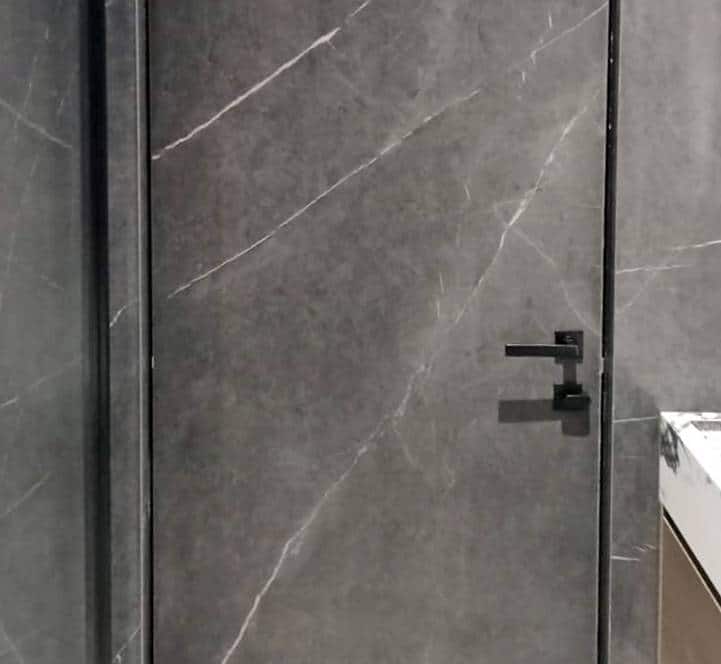


Luxury interiors are rarely built from standard dimensions alone.
In high-end villas, apartments, hospitality spaces, and commercial interiors, the door has to work with the architecture—not compete with it. Its height, finish, opening direction, frame, hardware, and relationship with the surrounding wall can all influence the final appearance.
This is where customization becomes important.
For Importa, customization is not simply about offering different colours or decorative surfaces. The company’s concealed door systems are developed around the idea that the door should adapt to the architectural concept, allowing designers and contractors to coordinate the door with the wider interior rather than redesigning the interior around a standard product.
Importa’s product portfolio supports customized dimensions, finishes, and opening configurations, giving architects, designers, developers, and contractors greater flexibility when specifying architectural door systems.
What Does Customization Mean in a Luxury Door System?
Direct Answer
Customization means adapting the door system to the project’s architectural requirements, including dimensions, surface finish, opening configuration, and selected hardware.
Detailed Explanation
A genuinely customized door should be considered as a complete architectural system rather than a decorative door leaf.
The overall solution can involve:
Door dimensions
Door thickness
Concealed frame configuration
Surface material
Opening direction
Hinged or sliding operation
Hardware
Wall finish coordination
Different finishes on opposing sides where the selected system permits it
Importa’s portfolio includes concealed hinged doors, sliding doors, pivot doors, movable partitions, and other architectural door solutions, allowing the specification to respond to different spatial requirements.
This is particularly valuable in projects where the architect has already established a strong design language.
Why Should Architects Specify the Door Before Finalizing the Interior?
Direct Answer
The earlier the door system is coordinated, the easier it is to achieve accurate wall alignment, finish continuity, and correct installation.
Detailed Explanation
A concealed door cannot be treated like a standard door that is selected at the end of the fit-out.
Its frame, opening size, wall construction, finish thickness, and hardware all need to work together.
Importa’s project process includes consultation, measurement, calculation, production, and installation, reflecting the importance of coordinating the door with project requirements from the beginning.
For contractors, early specification can help reduce:
Site modifications
Incorrect openings
Finish conflicts
Hardware changes
Installation delays
Unnecessary rework
The practical lesson is simple: a concealed door should be coordinated as part of the wall assembly, not added after the wall is finished.
How Does Importa Customization Support Different Interior Styles?
Direct Answer
Importa doors can be visually coordinated with a wide range of interior concepts through different surface materials, colours, textures, and architectural configurations.
Detailed Explanation
The company’s materials describe doors that can be finished to blend with walls or use contrasting architectural surfaces. Available approaches include painted finishes, HPL, veneer, glass, and mirror surfaces.
This creates several design possibilities.
Wall-Matched Doors
A concealed door can be finished in a colour or surface treatment that visually continues the surrounding wall.
The objective is not simply to hide the door. It is to make the opening feel like part of the architectural composition.
Wood and Veneer Interiors
Veneer introduces natural grain and warmth while allowing the door to participate in a wood-focused interior concept.
HPL Applications
HPL provides a broad range of decorative possibilities and is particularly useful when the project requires a durable, consistent decorative surface. Importa’s catalogue describes HPL as a dense decorative material available in different designs and textures.
Glass and Mirror
Glass can create a more contemporary appearance, while mirror surfaces can visually expand a space or integrate a concealed door into a mirrored interior.
Importa’s catalogue specifies 6 mm mirror and tempered coloured-glass options, with safety film described for these applications.
What Makes Aluminum Important in a Customized Door?
Direct Answer
Aluminum provides the structural platform that allows Importa concealed doors to combine customization with dimensional stability and a clean architectural appearance.
Detailed Explanation
The visible finish may receive most of the attention, but the hidden structure determines how the door performs.
Importa’s business materials describe a complete aluminum door frame and aluminum door structure as a key product differentiator. The company also positions its aluminum construction as suitable for UAE and GCC climatic conditions.
This matters because customization should not compromise structural performance.
A premium finish is only successful when the underlying system can maintain the required geometry and support its intended operation.
Can a Customized Door Be More Than a Hinged Door?
Direct Answer
Yes. Customization can involve the way the door moves as well as how it looks.
Detailed Explanation
Different spaces require different opening strategies.
Importa’s current product portfolio includes multiple configurations, including:
Concealed hinged doors
Sliding doors
Pocket sliding doors
Magic sliding doors
Pivot doors
Double doors
Movable partitions
The catalogue describes sliding solutions as space-saving systems and pivot doors as solutions capable of supporting larger and wider door panels.
This gives designers another level of flexibility.
For example, a compact room may benefit from a pocket sliding solution, while a large luxury entrance may require a pivot configuration to achieve the intended architectural proportion.
How Do Finishes Change the Role of the Door?
Direct Answer
The surface finish can transform a door from a separate functional object into an integrated architectural element.
Detailed Explanation
Consider a wall covered in natural-looking wood, stone-effect HPL, microcement, or another continuous finish.
A conventional door with a visible frame interrupts that composition.
A concealed system allows the designer to reduce that visual interruption.
The door can therefore become:
A continuation of the wall
A feature within a material composition
A discreet access point
A contrasting architectural panel
Part of a larger decorative surface
Importa’s product information specifically presents concealed doors as systems designed to sit flush with walls and support different decorative surfaces.
Why Is Two-Sided Customization Valuable?
Direct Answer
Different rooms can require different finishes, so the ability to coordinate each side of a door with its surrounding space can provide greater architectural freedom.
Detailed Explanation
An interior door often connects two visually different environments.
For example, one side may face a wood-panelled corridor while the opposite side belongs to a neutral bedroom or dressing area.
A single decorative treatment may not work equally well on both sides.
Where the selected Importa configuration supports it, different finishes can therefore help the door integrate with both spaces rather than forcing one design language across the entire opening.
This is particularly useful in luxury residential projects where every room may have its own material palette.
What Should Contractors Check Before Ordering a Customized Door?
Direct Answer
Contractors should confirm the opening dimensions, wall construction, required finish, door configuration, hardware, and installation conditions before production.
Detailed Explanation
Importa’s client communication materials indicate that drawings and opening dimensions are important when preparing quotations and project-specific solutions.
A practical pre-order checklist should include:
1. Opening Dimensions
Confirm the actual structural opening rather than relying only on assumed standard dimensions.
2. Wall Thickness
Check that the selected frame and door configuration correspond to the wall build-up.
3. Finish
Define whether the door will receive paint, HPL, veneer, glass, mirror, or another specified surface.
4. Opening Direction
Confirm whether the door opens inward, outward, slides, or uses another mechanism.
5. Hardware
Coordinate hinges, locks, handles, and any additional hardware before production.
6. Installation Sequence
Ensure the door system can be installed at the correct construction stage.
This level of preparation is particularly important for bespoke projects because modifications after production can be significantly more complicated than changes during design coordination.
How Can BIM Improve Custom Door Coordination?
Direct Answer
BIM files allow architects, engineers, designers, and contractors to coordinate door systems digitally before installation.
Detailed Explanation
Importa now provides BIM files to project professionals, supporting digital coordination during the design and engineering stages.
This is especially useful for customized architectural systems because the door is connected to several surrounding elements.
Digital coordination can help project teams review:
Door locations
Dimensions
Wall relationships
Opening configurations
Spatial coordination
Design intent
For larger UAE developments, BIM coordination can become particularly valuable when multiple consultants and trades are working from a shared project model.
What Are the Most Common Customization Mistakes?
Direct Answer
Most problems occur when customization is treated as a purely aesthetic decision instead of a technical specification.
Detailed Explanation
Several mistakes are worth avoiding.
Choosing the Finish Too Late
The finish can affect the door build-up and installation requirements.
Measuring Only the Door Leaf
The complete opening and wall assembly must be considered.
Ignoring the Hardware
Hardware influences operation, appearance, and installation.
Treating All Finishes the Same
Stone, glass, veneer, HPL, plaster, and paint have different characteristics.
Failing to Coordinate With the Wall
A concealed door depends on accurate surrounding construction.
Ordering Before Drawings Are Confirmed
Production should follow verified project information rather than assumptions.
These mistakes can turn a simple customization into expensive site rework.
How Does Importa Approach Custom Architectural Doors?
Direct Answer
Importa combines customizable design options with an engineered aluminum-based concealed door structure and technical coordination.
Detailed Explanation
Importa’s stated product differentiation includes aluminum door frames and aluminum internal structures, while its product portfolio provides multiple opening types and surface options.
The company’s target audience includes UAE architects, interior designers, fit-out companies, contractors, villa owners, and apartment owners, with products positioned for middle-to-luxury projects.
Importa also identifies project support through consultation, measurement, calculation, production, and installation.
This makes customization a coordinated process rather than simply a choice from a colour chart.
Customization as an Architectural Tool
The strongest luxury interiors are rarely defined by one expensive material or one dramatic feature.
They are defined by coordination.
A concealed door that aligns with a wall, follows the material palette, uses the appropriate opening mechanism, and is supported by a precisely engineered frame contributes to the architecture rather than interrupting it.
That is the real value of customization.
For UAE architects, developers, designers, and contractors, Importa provides a platform for turning individual architectural requirements into coordinated concealed door solutions. With customizable dimensions and finishes, multiple opening configurations, aluminum construction, and BIM support, the system can be considered as part of the architectural design from the earliest project stages.
In premium interiors, the objective is not simply to install a better-looking door.
It is to create a door that belongs to the architecture.
FAQ
What can be customized on an Importa door?
Depending on the selected system, customization can include dimensions, surface finishes, opening configuration, and hardware. Importa’s portfolio specifically describes customizable dimensions, finishes, and opening configurations.
Which finishes are available?
Importa’s supplied catalogue materials include painted surfaces, HPL, veneer, mirror, and tempered coloured glass. Specialized systems such as Concretto and Travertini support specific architectural finishing applications.
Are customized doors suitable for luxury villas?
Yes. Importa identifies high-end villas and premium residential interiors among its target applications and clients in the UAE.
Why is aluminum used in concealed doors?
Importa’s materials identify the complete aluminum frame and aluminum door structure as important to strength, stability, and suitability for GCC conditions.