

Interior architecture has entered a new era. Across the UAE, architects and designers are prioritizing cleaner spaces, seamless surfaces, and materials that perform reliably in demanding environments. Minimalist aesthetics, tall doors, flush walls, and concealed systems are now common in premium villas, offices, and commercial developments.
Behind many of these modern design solutions is one material that has become increasingly important: aluminum.
At Importa, aluminium is not simply an option—it is the structural backbone of our concealed door systems. This article explains why aluminum has become essential in modern interiors and how it supports long-term architectural performance in the UAE.
Why Is Aluminium Essential in Modern Interior Architecture?
Direct Answer
Because aluminum offers structural precision, durability, and design flexibility that traditional materials often cannot match.
Detailed Explanation
Contemporary interior architecture relies on extremely precise alignment. Flush doors, concealed frames, shadow gaps, and minimalist detailing leave no room for structural instability.
Materials must maintain their shape under varying conditions. Aluminum excels here because it provides:
Excellent structural rigidity
High resistance to humidity and heat
Long-time period dimensional stability
Compatibility with precision-engineered systems
In projects where millimeter-level accuracy matters, aluminum allows architects to achieve clean, uninterrupted lines without worrying about deformation over time.
Why Does Climate Matter When Choosing Door Frame Materials?
Direct Answer
Because the UAE’s climate places significant stress on traditional materials.
Detailed Explanation
Buildings in the GCC face unique environmental conditions. Even interior elements are influenced by temperature differences between outdoor heat and indoor air-conditioning systems.
Over time, these cycles can cause certain materials to expand, contract, or lose alignment. This is especially common with natural wood-based structures.
Aluminum behaves differently. It keeps structural integrity no matter temperature version and does now no longer take in moisture. This reliability is one cause why Importa manufactures its hid door frames the use of aluminum instead of conventional materials.
For projects that demand long-term precision, this stability becomes critical.
How Does Aluminium Support Seamless Interior Design?
Direct Answer
It enables flush integration and slim structural profiles.
Detailed Explanation
Minimalist design depends on subtlety. When doors, frames, or partitions become visually bulky, they interrupt architectural flow.
Aluminum can be engineered into thin yet strong profiles. This allows designers to achieve:
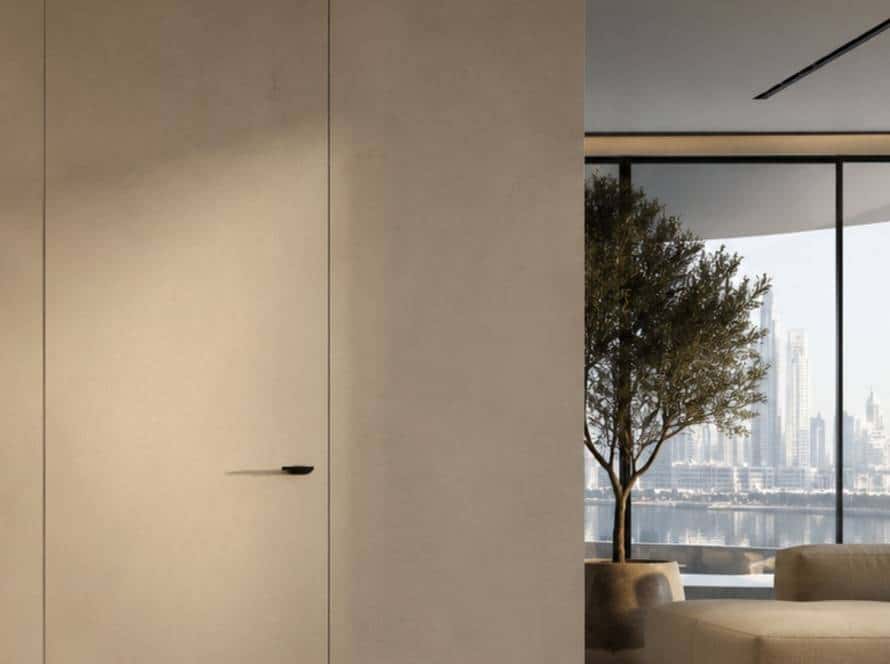
Flush-to-wall hidden doors
Slim shadow gaps
Full-height door installations
Clean wall-to-door transitions
Importa’s concealed aluminum frames are specifically designed to support this level of integration, helping architects maintain uninterrupted surfaces and refined detailing.
Is Aluminium Strong Enough for Tall Modern Doors?
Direct Answer
Yes—aluminum provides the structural strength required for larger door systems.
Detailed Explanation
Modern villas and offices increasingly feature tall doors that reach close to the ceiling. These proportions enhance spatial perception and create a sense of luxury.
However, taller doors also increase weight and structural stress.
Aluminum frames handle these loads effectively because they combine strength with lightweight characteristics. This balance allows concealed door systems to maintain alignment and smooth operation even with larger dimensions.
At Importa, our aluminum frames are engineered to support these architectural trends while maintaining long-term reliability.
Does Aluminium Contribute to Sustainable Architecture?
Direct Answer
Yes. Aluminum is highly recyclable and supports long product lifecycles.
Detailed Explanation
Sustainability is becoming an essential factor in construction decisions across the UAE. Materials that require frequent replacement create unnecessary waste and maintenance costs.
Aluminum gives numerous environmental advantages:
It is completely recyclable
It has an extended lifespan
It resists structural degradation
It reduces maintenance needs
By choosing durable materials that last longer, developers can reduce lifecycle costs and environmental impact at the same time.
Importa’s aluminum-based systems are designed to support both durability and sustainability.
Where Is Aluminium Used in Modern Interior Systems?
Today, aluminum plays a role in many architectural components beyond windows and exterior façades.
In interior architecture, it is commonly used for:
Concealed door frames
Flush skirting profiles
Sliding and pivot systems
Architectural partitions
Integrated wall systems
These applications benefit from aluminum’s precision manufacturing capabilities, which allow manufacturers to create highly accurate structural profiles.
Importa specializes in concealed aluminum door frames that integrate seamlessly into wall systems used in modern interiors.
Common Mistakes When Selecting Interior Door
Despite its advantages, aluminum must still be specified and installed correctly. Several common mistakes can reduce performance if overlooked.
Choosing Non-Engineered Systems
Not all aluminum profiles are designed for concealed architectural applications. Structural quality and engineering matter.
Poor Coordination With Wall Finishes
Flush doors require careful alignment between the frame and surrounding wall layers.
Late Design Integration
Hidden door systems must be included during early architectural planning.
Ignoring Hardware Compatibility
Hinges, locks, and magnetic systems must work together with the frame structure.
Importa works closely with architects and contractors to ensure concealed systems are correctly specified and integrated during construction.
Why Importa Uses Aluminium as the Core of Its Door Systems
At Importa, our design philosophy centers on precision architecture. We believe doors should enhance interiors without disrupting visual harmony.
By producing hidden aluminum door frames, we offer answers that support:
Perfect flush alignment
Long-time period structural stability
Compatibility with current hardware systems
Custom finishes
Adaptation to the UAE climate
Our factory-based production process ensures consistent quality, while our customization capabilities allow architects and designers to achieve the exact look they envision.
Practical Advice for Architects and Developers
When specifying interior door systems in the UAE, consider the following:
Choose materials designed for local climate conditions
Prioritize structural stability over short-term cost savings
Integrate concealed systems early in architectural drawings
Work with manufacturers who specialize in precision engineering
Evaluate the entire door system—not just the surface finish
Taking these steps will help ensure that interior doors remain aligned, functional, and visually refined for many years.
Final Thoughts
Modern interior architecture is defined by precision. Clean lines, seamless surfaces, and minimalist detailing demand materials that can perform reliably under real-world conditions.
Aluminum has emerged as one of the most important materials supporting this shift. Its structural stability, design flexibility, and durability make it ideal for concealed door systems and contemporary interiors.
At Importa, aluminum is not simply a material choice—it is the foundation of our engineering approach.
By combining advanced manufacturing with thoughtful architectural design, Importa continues to deliver hidden door solutions that meet the evolving expectations of architects, designers, and developers across the UAE.
FAQ
What are the main types of openings in Importa doors?
There are traditional hinged doors, hidden concealed doors, interior sliding doors, exterior sliding doors, pivot doors, folding doors, flush-wall doors. rotating internal and external Importa doors.
What type of interior doors do you produce in the UAE?
Importa produce in the UAE interior internal and external doors with different materials of surfaces. We produce in UAEprimed doors, painted doors in color of walls, doors with hpl panels in texture of stones, doors with veneer and texture of best european wood, doors with solid wood panels, doors with coloured glass, doors with mirrors as you wish. For more info call or WhatsApp us.
What is the price of Dubai doors Importa ?
The price of Dubai doors Imports depends on the sizes of doors, type of opening of doors and material of door surfaces and starts from 3600 AED. Contact us to get a quotation.
What doors company is in Dubai? What doors manufacturer is in UAE?
Importa doors company is in Dubai. Importa company whose specialization is doors production in the United Arab Emirates.